Tell us about the job
Takes about a minute. No obligation.
A furnace contractor quoting in Daviess County sizes the job against what the climate actually asks of a heating system, and that is a different calculation than reading a spec sheet. 146 severe weather events were recorded in Daviess County, Kentucky between 2015 and 2024. At that rate, severe weather is a standing condition in this area, and a new furnace installed without accounting for it will run harder and cycle differently than the manufacturer's default figures suggest. Duct layout, equipment capacity, and how well the unit is sealed to the structure all get set at installation, and those decisions hold for the life of the system.
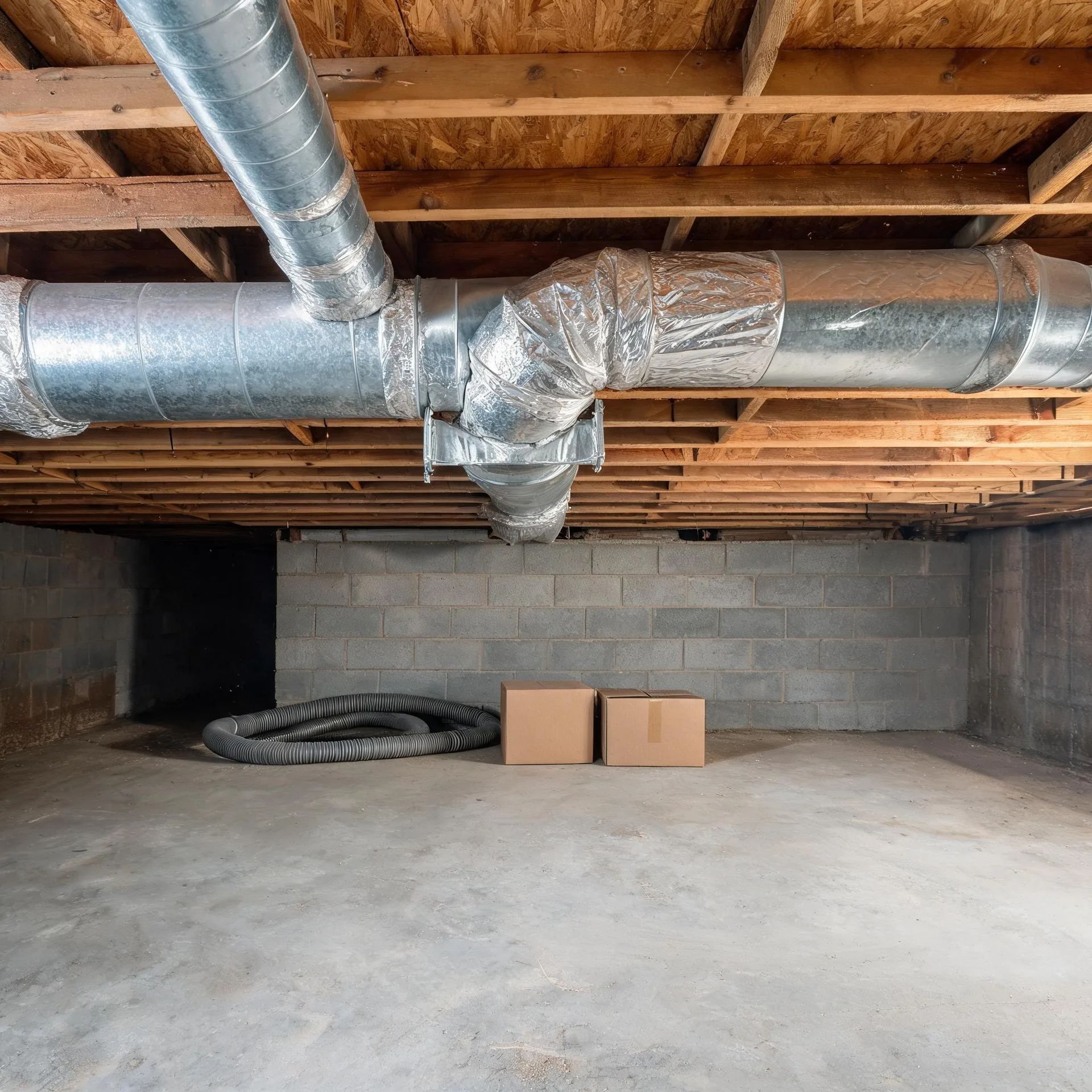
Ductwork sized for a different era of furnace does not simply carry whatever gets connected to it. Half the homes in Daviess County, Kentucky were built in 1977 or earlier (2020-2024 ACS 5-year). That matters for installation work because a new furnace's airflow requirements have to be met by what is already in the walls and ceiling, and in a house built for earlier equipment, the existing trunk lines and branch runs may be undersized for the unit a contractor would otherwise recommend. The electrical side follows the same logic. A contractor quoting a furnace installation here measures the duct system before settling on equipment, not after.
What Gets Installed With a New Furnace
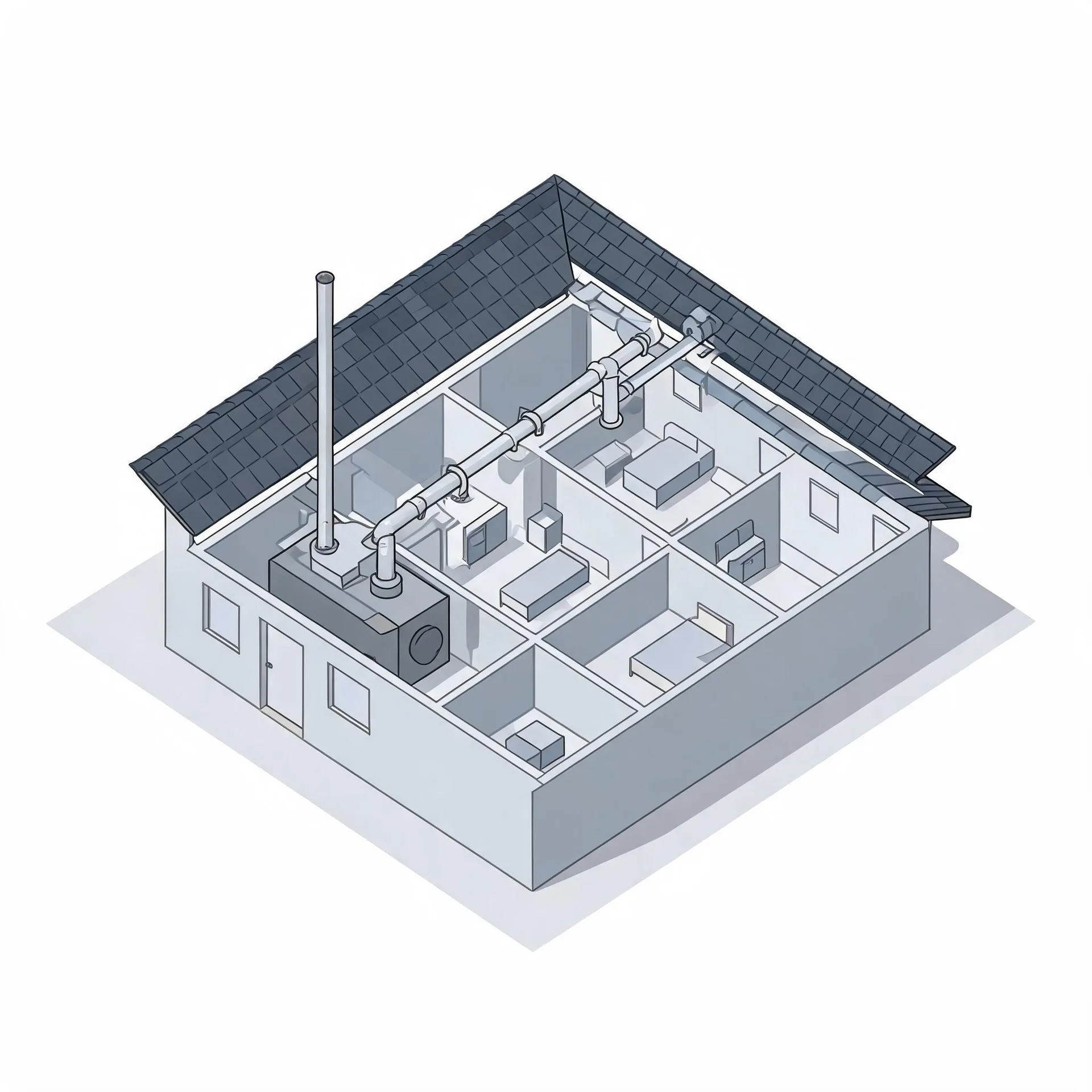
The furnace itself sits in a basement, utility room, or closet and burns fuel to produce heat. A blower motor inside the cabinet pushes that heated air into the supply side of the duct system. The heat exchanger, housed within the furnace cabinet, is the metal barrier between the combustion chamber and the air your household breathes.
The flue pipe runs from the furnace up and out of the house, carrying combustion gases away from the living space. Alongside the furnace, a contractor installs a thermostat on an interior wall to control when the system fires, and a filter housing at the air return to catch particulates before they reach the cabinet.
The drawing shows a typical layout, and a licensed contractor determines exactly what applies to your house and its existing setup.
Get matched in Daviess CountyDaviess County, by the numbers
146 severe weather events were recorded in Daviess County, Kentucky between 2015 and 2024.
NOAA National Centers for Environmental Information, Storm Events Database, bulk CSV export, events 2015-01-01 through 2024-12-31.Half the homes in Daviess County, Kentucky were built in 1977 or earlier (2020-2024 ACS 5-year).
U.S. Census Bureau, 2020-2024 American Community Survey 5-Year EstimatesDaviess County, Kentucky holds 44,431 housing units (2020-2024 ACS 5-year).
U.S. Census Bureau, 2020-2024 American Community Survey 5-Year EstimatesOwners occupy 68.1% of the occupied homes in Daviess County, Kentucky (2020-2024 ACS 5-year).
U.S. Census Bureau, 2020-2024 American Community Survey 5-Year EstimatesCodes & Standards Governing Furnace Installation in Daviess County, Kentucky5 sourced rules and standards
What the installation actually looks like
Non-weatherized gas furnaces manufactured on or after November 19, 2015 must reach 80.0 percent AFUE.
Non-weatherized oil-fired furnaces manufactured on or after November 19, 2015 must reach 83.0 percent AFUE.
Mobile home gas furnaces manufactured on or after November 19, 2015 must reach 80.0 percent AFUE.
Non-weatherized gas furnaces manufactured on or after December 18, 2028 must reach 95.0 percent AFUE, up from the 80.0 percent minimum that applies to units manufactured before that date.
Licensing Rules for HVAC Work in Daviess County, Kentucky
Kentucky requires a licence to practise heating, ventilation and air conditioning contracting: a person may not do the work unless they have met the state licensing requirements.
Severe Weather Events in Daviess County
The weather a furnace works through shapes how hard it runs and how long its components last. What hits Daviess County hits the equipment inside every home here, which is why local installation decisions start with local conditions.
146 severe weather events, 2015–2024. Source: NOAA National Centers for Environmental Information, Storm Events Database.