Tell us about the job
Takes about a minute. No obligation.
A furnace repair in Greenup County asks a contractor to sort out what years of hard running have worn down before they can point to a specific failure. 121 severe weather events were recorded in Greenup County, Kentucky between 2015 and 2024. At that rate, severe weather is a standing condition for every system in this county, and its effects accumulate in heat exchangers, blower motors, and control boards over seasons rather than arriving as a single visible event. A contractor who skips that history and quotes the first failed part often misses what drove it to fail.
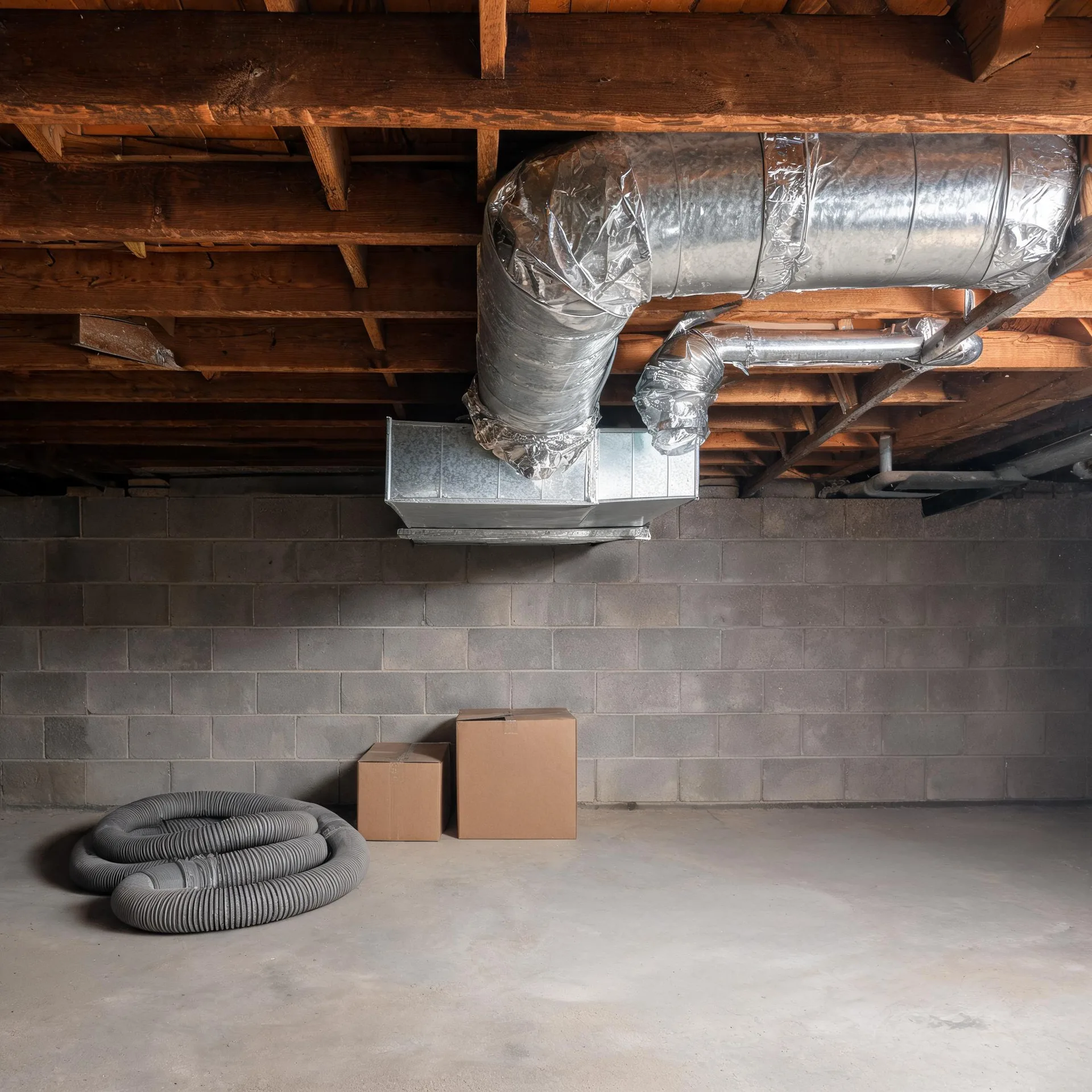
Ductwork laid down for an earlier generation of furnaces carries assumptions about airflow and static pressure that a contractor has to test against what is actually running now. Half the homes in Greenup County, Kentucky were built in 1975 or earlier (2020-2024 ACS 5-year). A repair call on a furnace here can turn on whether the existing duct runs are restricting the system, whether a blower is working against a distribution layout it was never matched to, and whether a failing component is failing on its own terms or because the house is fighting it. That distinction changes what gets ordered and what gets left alone.
The Parts of a Furnace a Contractor Checks First
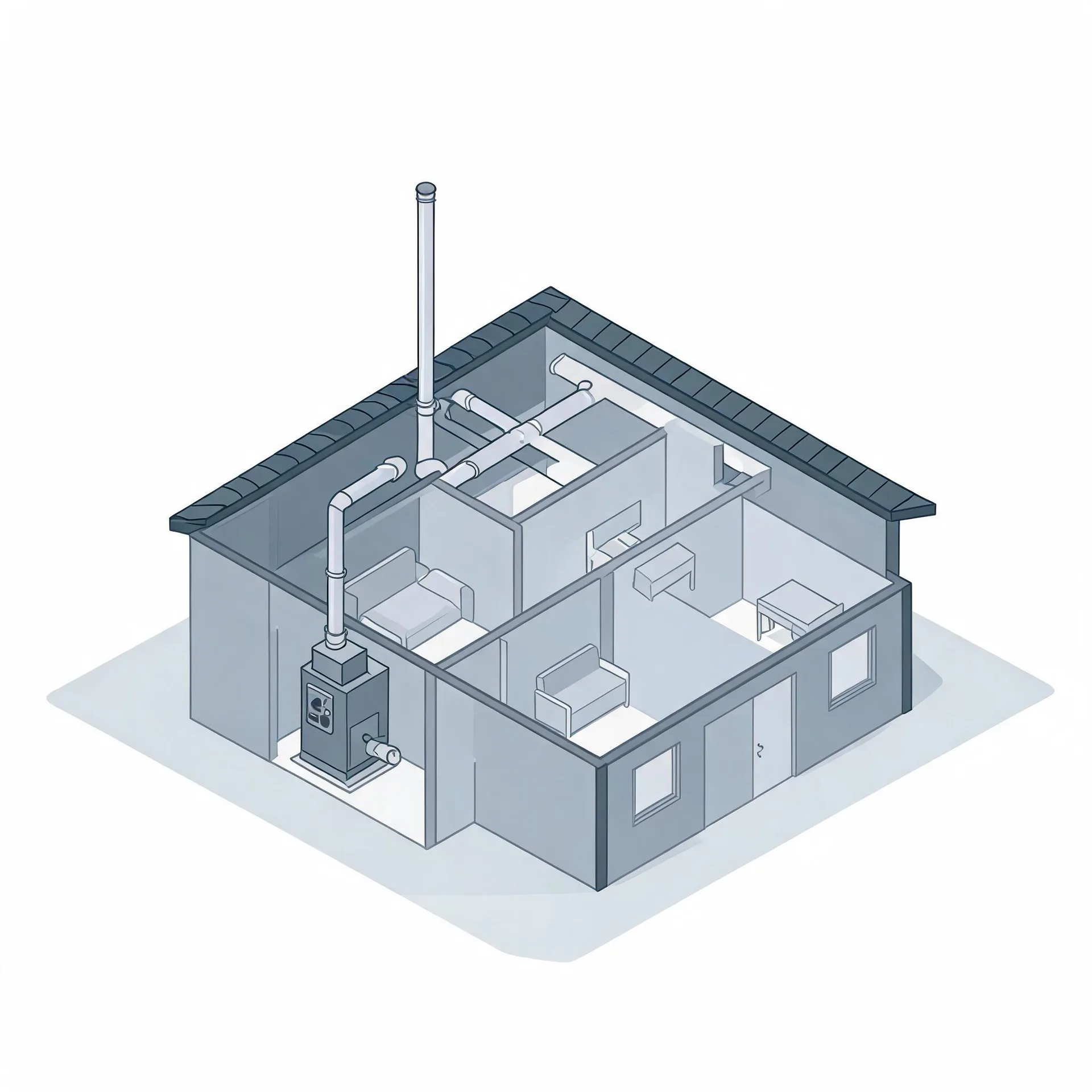
The furnace itself sits in a basement, utility closet, or crawl space and is the piece a contractor opens first. Inside it, the heat exchanger is the part most worth understanding: when it cracks, combustion gases can move into the living space, so it gets a close look early. The burners, which sit just below it, are checked for uneven flame or carbon buildup.
The blower motor sits at the base of the unit and pushes conditioned air through the house. Near it, the draft inducer pulls exhaust gases out before each heating cycle starts. The control board ties those parts together, and when behavior is erratic rather than absent, that board is often where a contractor looks next.
The drawing shows a typical furnace layout, and a licensed contractor will assess which parts apply to the specific equipment and setup in your home.
Get matched in Greenup CountyGreenup County, by the numbers
121 severe weather events were recorded in Greenup County, Kentucky between 2015 and 2024.
NOAA National Centers for Environmental Information, Storm Events Database, bulk CSV export, events 2015-01-01 through 2024-12-31.Half the homes in Greenup County, Kentucky were built in 1975 or earlier (2020-2024 ACS 5-year).
U.S. Census Bureau, 2020-2024 American Community Survey 5-Year EstimatesGreenup County, Kentucky holds 16,271 housing units (2020-2024 ACS 5-year).
U.S. Census Bureau, 2020-2024 American Community Survey 5-Year EstimatesOwners occupy 80.3% of the occupied homes in Greenup County, Kentucky (2020-2024 ACS 5-year).
U.S. Census Bureau, 2020-2024 American Community Survey 5-Year EstimatesCodes & Standards Governing Furnace Repair in Greenup County, Kentucky5 sourced rules and standards
What Happens When the Contractor Arrives
Non-weatherized gas furnaces manufactured on or after November 19, 2015 must reach 80.0 percent AFUE.
Non-weatherized oil-fired furnaces manufactured on or after November 19, 2015 must reach 83.0 percent AFUE.
Mobile home gas furnaces manufactured on or after November 19, 2015 must reach 80.0 percent AFUE.
Non-weatherized gas furnaces manufactured on or after December 18, 2028 must reach 95.0 percent AFUE, up from the 80.0 percent minimum that applies to units manufactured before that date.
Licensing Rules for HVAC Repair in Greenup County, Kentucky
Kentucky requires a licence to practise heating, ventilation and air conditioning contracting: a person may not do the work unless they have met the state licensing requirements.
Severe Weather Events in Greenup County
Extreme weather puts real load on furnaces, pushing them to run harder and longer than normal conditions require. How often that stress hits Greenup County is a local fact, and it shapes how much repair work the equipment here actually faces.
121 severe weather events, 2015–2024. Source: NOAA National Centers for Environmental Information, Storm Events Database.