Tell us about the job
Takes about a minute. No obligation.
A furnace that breaks down in Hancock County has almost certainly been losing ground to age or deferred maintenance, and the area's weather record supports that reading. 54 severe weather events were recorded in Hancock County, Kentucky between 2015 and 2024. At that rate, severe weather is an event here, not a standing condition, so a contractor diagnosing a failed heat exchanger or a worn inducer motor starts with installation quality and service history rather than storm exposure. The components most likely to go are the ones that degrade quietly over years of ordinary cycling.
Ductwork and wiring in a house this old have already been adapted once, maybe more than once, but the furnace itself is the variable that shapes the repair bill. Half the homes in Hancock County, Kentucky were built in 1981 or earlier (2020-2024 ACS 5-year). A system installed into stock that old has had time to drift far from current production runs, and when a contractor opens the heat exchanger or pulls a control board, the question is whether that component still has a supply chain behind it. If it does, the repair is straightforward. If the part is discontinued or available only through specialty suppliers, the scope and the cost change before the contractor has touched anything else.
The Parts of a Furnace a Contractor Checks First
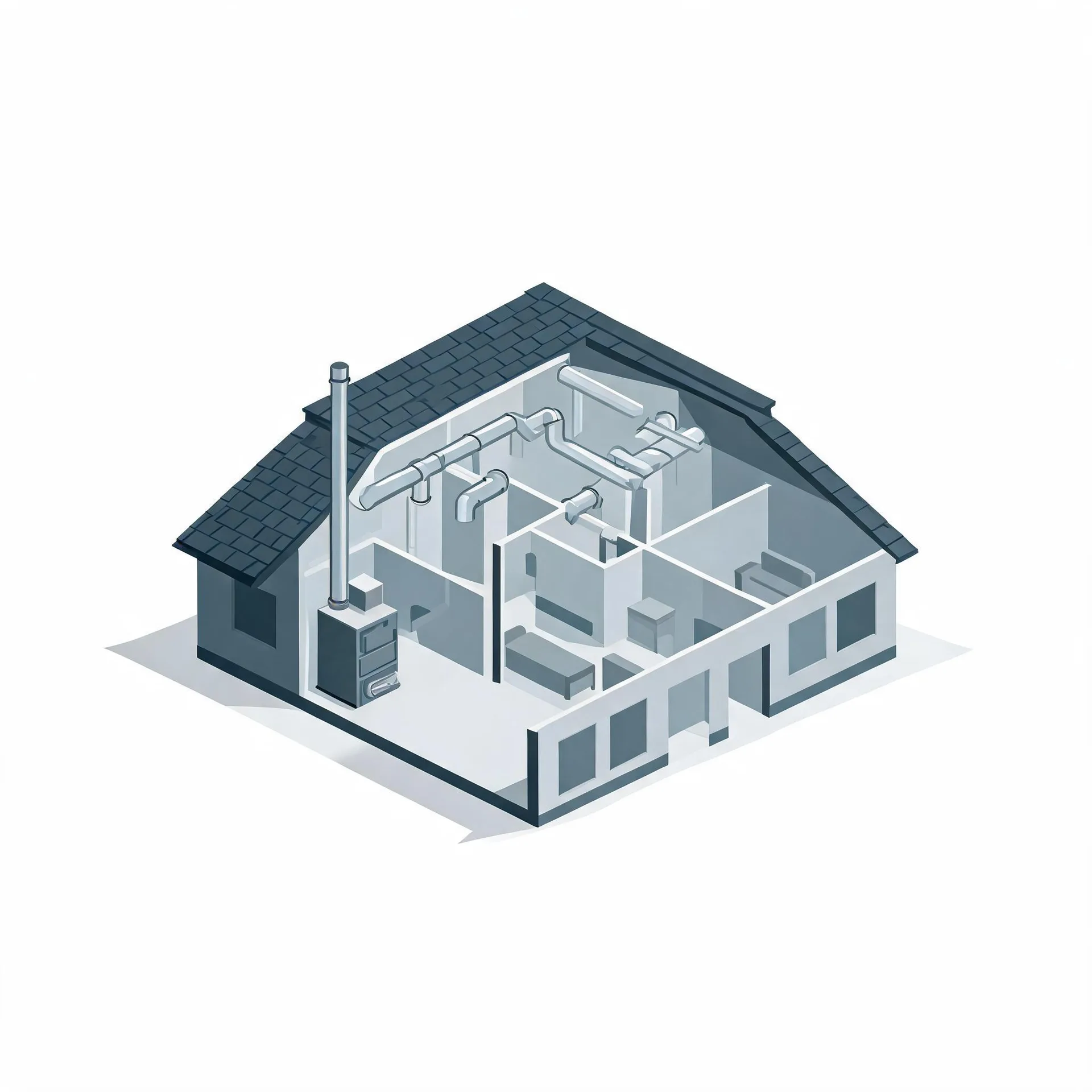
The heat exchanger sits inside the furnace cabinet and is the piece a contractor goes to early in a repair call. Cracks or corrosion there affect the whole system. The burner assembly, also inside the cabinet, is where combustion starts, and a dirty or misfiring burner is behind a large share of furnace failures.
The blower motor sits at the base of the cabinet and moves conditioned air into the supply plenum. The control board, mounted inside the cabinet as well, is the electrical brain that sequences every other component. The flue pipe runs from the cabinet to an exterior vent, and a contractor checks it for blockages or damage that would affect safe operation.
The drawing shows a general furnace layout, and a licensed contractor assesses which parts apply and what condition they are in for your specific house.
Get matched in Hancock CountyHancock County by the numbers
54 severe weather events were recorded in Hancock County, Kentucky between 2015 and 2024.
NOAA National Centers for Environmental Information, Storm Events Database, bulk CSV export, events 2015-01-01 through 2024-12-31.Half the homes in Hancock County, Kentucky were built in 1981 or earlier (2020-2024 ACS 5-year).
U.S. Census Bureau, 2020-2024 American Community Survey 5-Year EstimatesHancock County, Kentucky holds 3,928 housing units (2020-2024 ACS 5-year).
U.S. Census Bureau, 2020-2024 American Community Survey 5-Year EstimatesOwners occupy 77.2% of the occupied homes in Hancock County, Kentucky (2020-2024 ACS 5-year).
U.S. Census Bureau, 2020-2024 American Community Survey 5-Year EstimatesCodes & Standards Covering Furnace Repair in Hancock County, Kentucky5 sourced rules and standards
What HVAC Repair Looks Like in Hancock County
Non-weatherized gas furnaces manufactured on or after November 19, 2015 must reach 80.0 percent AFUE.
Non-weatherized oil-fired furnaces manufactured on or after November 19, 2015 must reach 83.0 percent AFUE.
Mobile home gas furnaces manufactured on or after November 19, 2015 must reach 80.0 percent AFUE.
Non-weatherized gas furnaces manufactured on or after December 18, 2028 must reach 95.0 percent AFUE, up from the 80.0 percent minimum that applies to units manufactured before that date.
Licensing Rules for HVAC Repair in Hancock County, Kentucky
Kentucky requires a licence to practise heating, ventilation and air conditioning contracting: a person may not do the work unless they have met the state licensing requirements.
Severe Weather Events in Hancock County
Weather puts direct load on heating and cooling equipment, and Hancock County's climate is not a fixed thing from one year to the next. A furnace that holds up through a mild stretch faces different demands after a hard one, which makes local weather history a real factor in understanding repair patterns.
54 severe weather events, 2015–2024. Source: NOAA National Centers for Environmental Information, Storm Events Database.