Tell us about the job
Takes about a minute. No obligation.
A furnace repair in Johnson County starts with what the equipment has already been asked to carry. 74 severe weather events were recorded in Johnson County, Kentucky between 2015 and 2024. At that rate, severe weather is a standing condition of operating here, and contractors find that heat exchangers, ignition assemblies, and pressure switches show stress patterns consistent with repeated hard-weather cycles. Age still matters, but writing off a failed component as simple wear before checking what conditions it ran against produces an incomplete diagnosis and sometimes the wrong repair.
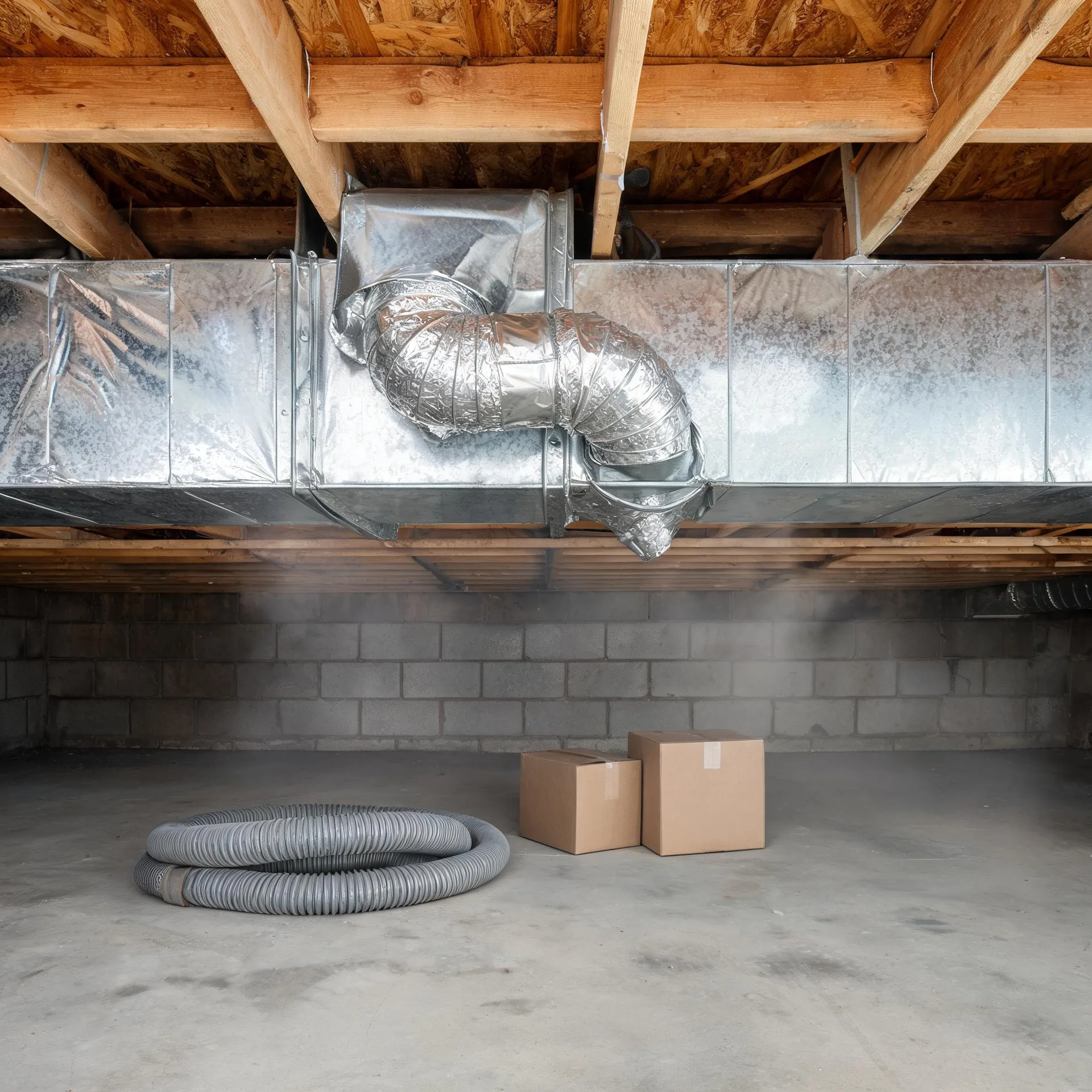
Half the homes in Johnson County, Kentucky were built in 1983 or earlier (2020-2024 ACS 5-year). Furnaces in houses that old have been through enough heating seasons that wear on heat exchangers, igniters, and blower motors is uneven and unpredictable. One unit may have had components swapped along the way; another may be running on originals. A contractor opening the cabinet here is not working from a general profile of the vintage. Parts availability for systems that old also varies by manufacturer, and what a technician finds inside the unit is what sets the bill.
The Parts of a Furnace a Contractor Checks First
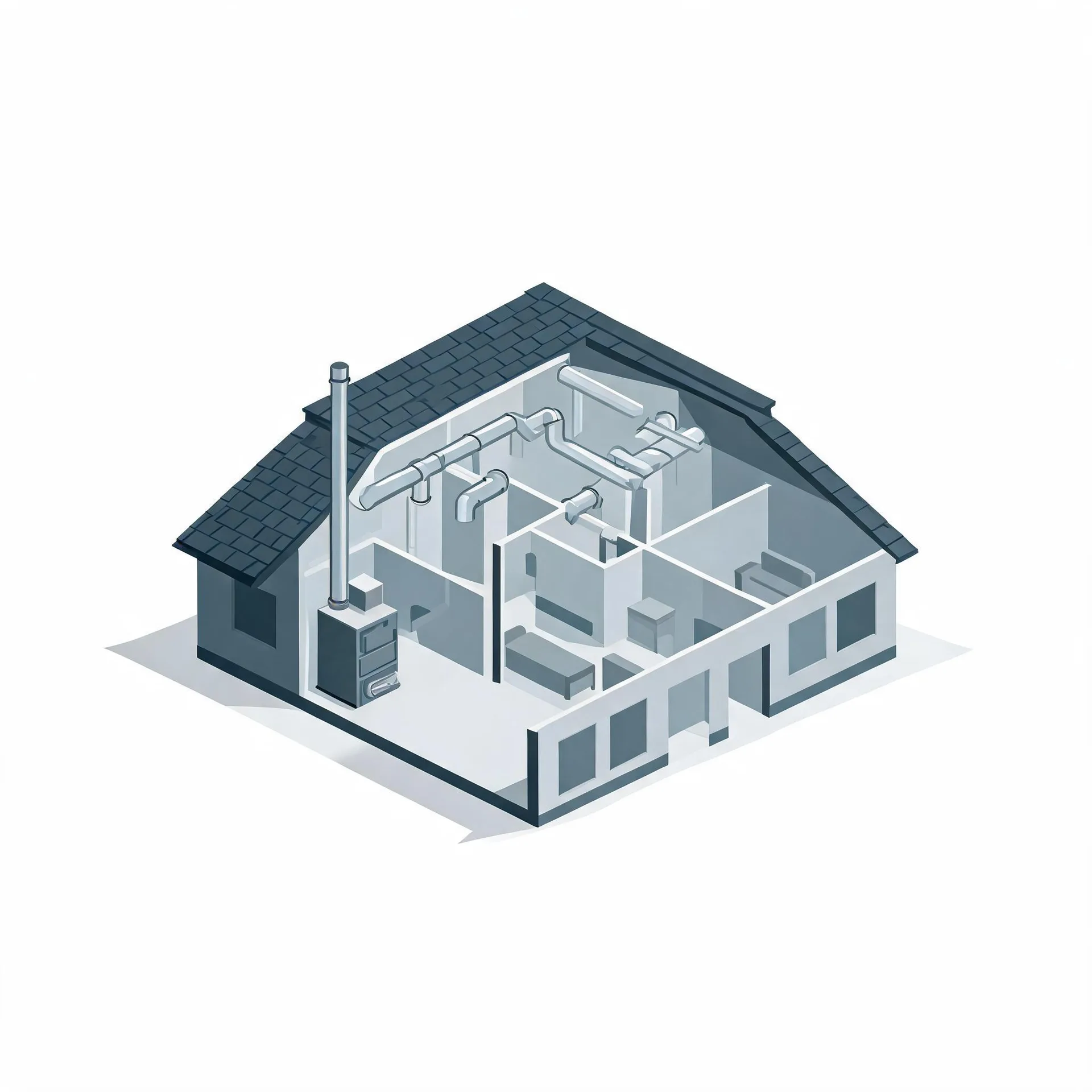
The furnace itself sits in a basement, utility room, or closet and is the piece a contractor goes to first. Inside it, the heat exchanger is the part most worth understanding for repair work: it is a metal chamber that carries combustion gases away from the air your family breathes, and a crack or hole there is one of the more serious faults a contractor will rule out early. The burners, which sit just below it, are where fuel ignites, and they are a common source of ignition and heating problems.
The blower motor sits at the base of the furnace cabinet and pushes conditioned air out through the supply side of your duct system. The flue pipe runs from the top or back of the furnace to an exterior wall or roof and carries exhaust gases out of the house. The thermostat, mounted on a wall in the living space, is the control point that tells the furnace when to fire and when to stop, and a fault there can mimic a furnace problem.
The drawing shows a general layout of these components, and a licensed contractor will determine exactly what applies to the equipment and configuration in your home.
Get matched in Johnson CountyJohnson County, Kentucky, by the numbers
74 severe weather events were recorded in Johnson County, Kentucky between 2015 and 2024.
NOAA National Centers for Environmental Information, Storm Events Database, bulk CSV export, events 2015-01-01 through 2024-12-31.Half the homes in Johnson County, Kentucky were built in 1983 or earlier (2020-2024 ACS 5-year).
U.S. Census Bureau, 2020-2024 American Community Survey 5-Year EstimatesJohnson County, Kentucky holds 10,583 housing units (2020-2024 ACS 5-year).
U.S. Census Bureau, 2020-2024 American Community Survey 5-Year EstimatesOwners occupy 68.3% of the occupied homes in Johnson County, Kentucky (2020-2024 ACS 5-year).
U.S. Census Bureau, 2020-2024 American Community Survey 5-Year EstimatesCodes & Standards Covering Furnace Repair in Johnson County, Kentucky5 sourced rules & standards
What HVAC Repair Looks Like in Johnson County
Non-weatherized gas furnaces manufactured on or after November 19, 2015 must reach 80.0 percent AFUE.
Non-weatherized oil-fired furnaces manufactured on or after November 19, 2015 must reach 83.0 percent AFUE.
Mobile home gas furnaces manufactured on or after November 19, 2015 must reach 80.0 percent AFUE.
Non-weatherized gas furnaces manufactured on or after December 18, 2028 must reach 95.0 percent AFUE, up from the 80.0 percent minimum that applies to units manufactured before that date.
Licensing Rules for HVAC Repair in Johnson County, Kentucky
Kentucky requires a licence to practise heating, ventilation and air conditioning contracting: a person may not do the work unless they have met the state licensing requirements.
Severe Weather Events in Johnson County
Extreme weather puts real strain on a furnace, cycling it harder and more often than mild seasons ever would. How much of that pressure Johnson County equipment absorbs is a local fact, and it shapes what repair needs look like here.
74 severe weather events, 2015–2024. Source: NOAA National Centers for Environmental Information, Storm Events Database.