Tell us about the job
Takes about a minute. No obligation.
A contractor quoting a furnace repair in Clark County works out early whether the system failed under pressure or simply wore out. 67 severe weather events were recorded in Clark County, Kentucky between 2015 and 2024. At that rate, severe weather is an occasional disruption rather than a grinding constant, which means most heat exchangers, igniters, and control boards that fail here give out because of age or deferred maintenance, not because the system was run hard against repeated storms. A homeowner expecting a weather-related diagnosis is usually looking at a simpler story: the equipment got old, or it went too long between service calls.
Furnace repair in older housing runs into a specific problem once the equipment is open: parts for systems installed in houses that have already outlasted two or three previous furnaces can be genuinely hard to source. Half the homes in Clark County, Kentucky were built in 1979 or earlier (2020-2024 ACS 5-year). A contractor who opens a heat exchanger or pulls a control board in stock like this has to find out whether the manufacturer still makes that component, or whether the job now depends on a supplier of old stock. That sourcing question changes how long the repair takes and what the homeowner pays for parts.
The Parts of a Furnace a Contractor Checks First
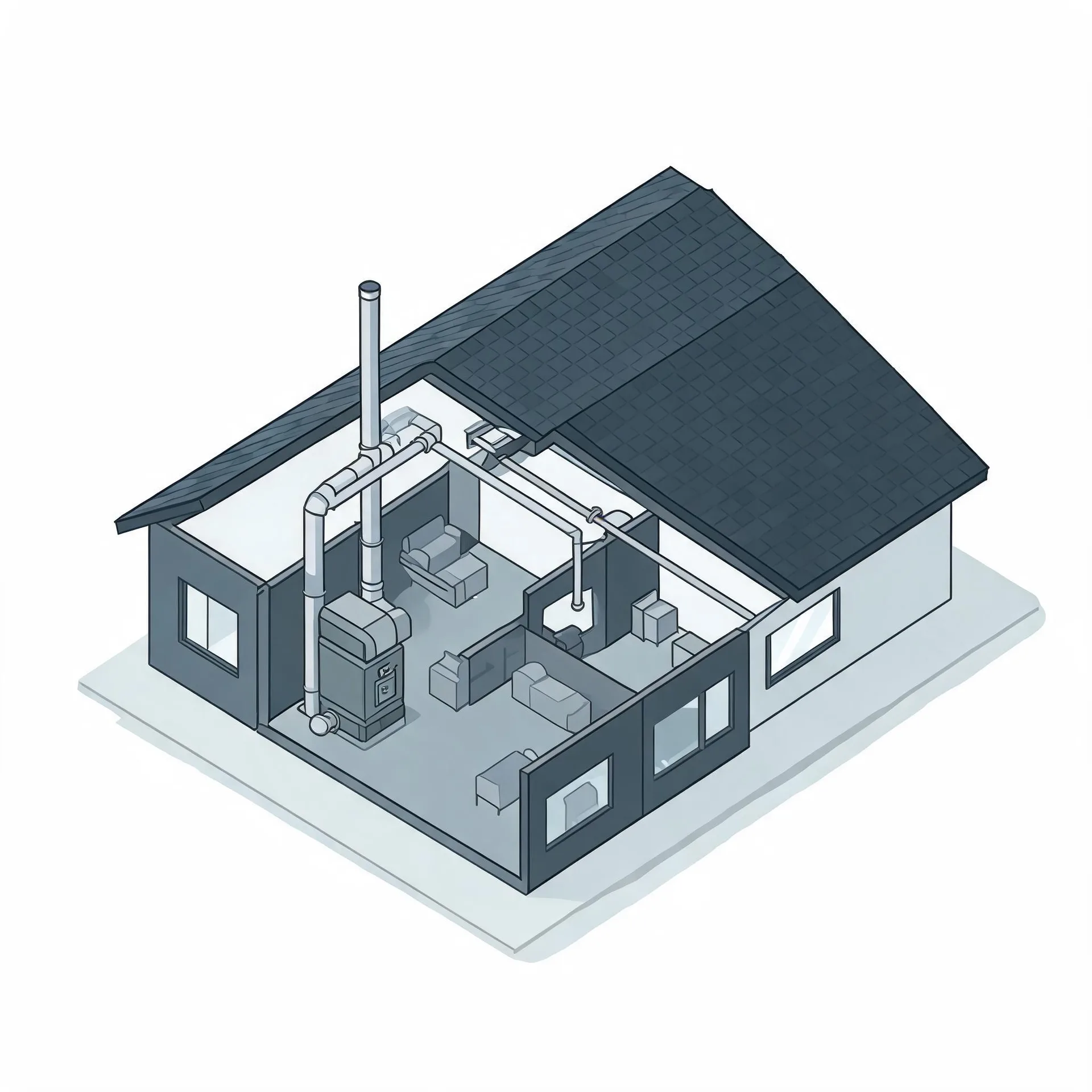
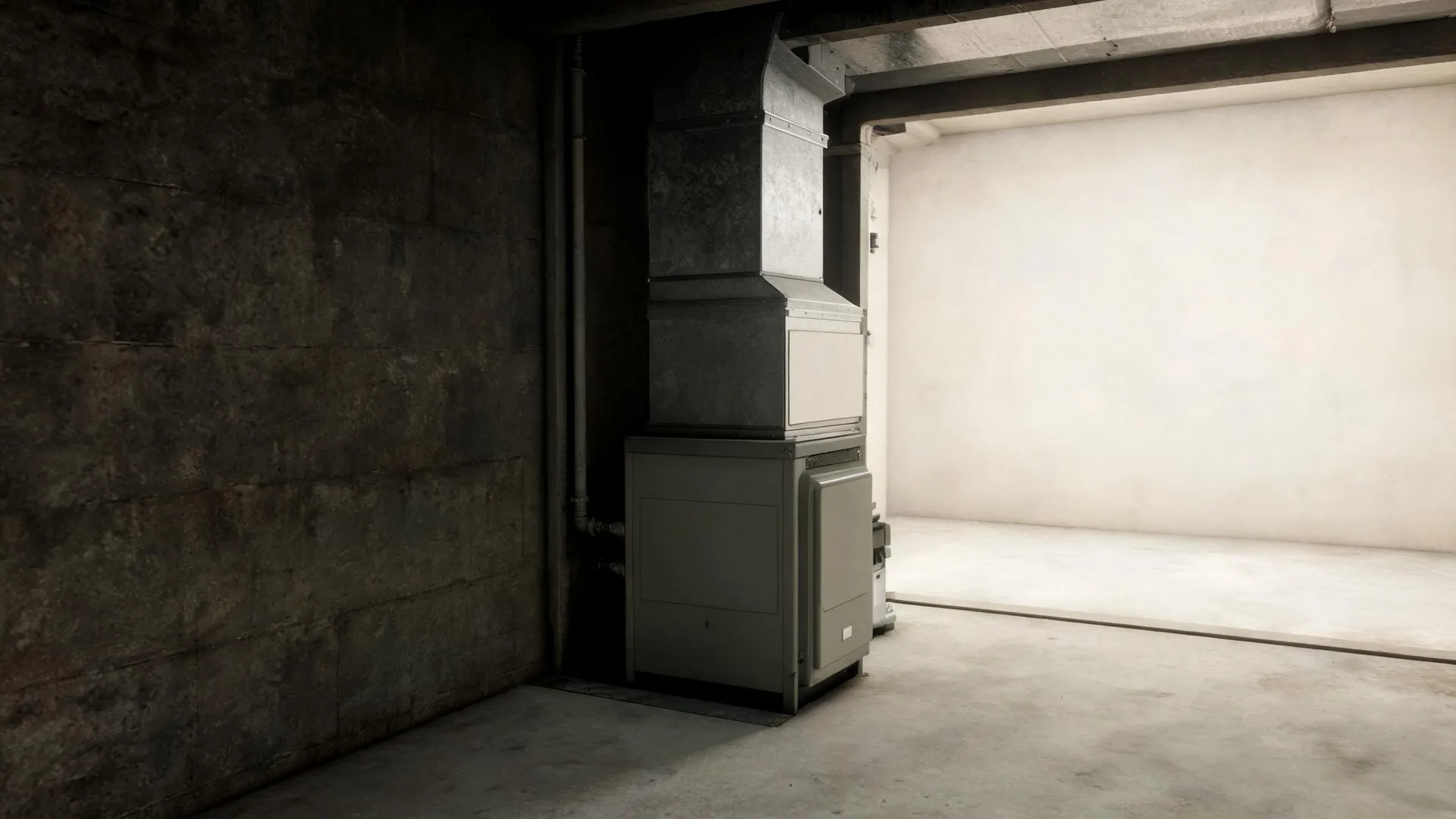
The furnace itself sits in a basement, utility closet, or mechanical room and is the heart of the system. Inside it, the heat exchanger is the piece a contractor goes to early when something is wrong. Cracks or failures there affect both heat output and air quality, making it a primary suspect when the system underperforms.
The blower motor pushes conditioned air out through the supply side of the house and sits inside the furnace cabinet. The flue or exhaust vent runs from the furnace to the outside and removes combustion gases. The thermostat, mounted on a wall in the living space, is the control point, and a fault there can mimic problems that look like they belong deeper in the system.
The drawing shows a typical furnace layout, and a licensed contractor determines which components apply to your specific setup.
Get matched in Clark CountyClark County, Kentucky, by the numbers
67 severe weather events were recorded in Clark County, Kentucky between 2015 and 2024.
NOAA National Centers for Environmental Information, Storm Events Database, bulk CSV export, events 2015-01-01 through 2024-12-31.Half the homes in Clark County, Kentucky were built in 1979 or earlier (2020-2024 ACS 5-year).
U.S. Census Bureau, 2020-2024 American Community Survey 5-Year EstimatesClark County, Kentucky holds 16,418 housing units (2020-2024 ACS 5-year).
U.S. Census Bureau, 2020-2024 American Community Survey 5-Year EstimatesOwners occupy 70.7% of the occupied homes in Clark County, Kentucky (2020-2024 ACS 5-year).
U.S. Census Bureau, 2020-2024 American Community Survey 5-Year EstimatesCodes & Standards Covering Furnace and HVAC Repair in Clark County, Kentucky5 sourced rules and standards
What Happens When a Contractor Comes Out in Clark County
Non-weatherized gas furnaces manufactured on or after November 19, 2015 must reach 80.0 percent AFUE.
Non-weatherized oil-fired furnaces manufactured on or after November 19, 2015 must reach 83.0 percent AFUE.
Mobile home gas furnaces manufactured on or after November 19, 2015 must reach 80.0 percent AFUE.
Non-weatherized gas furnaces manufactured on or after December 18, 2028 must reach 95.0 percent AFUE, up from the 80.0 percent minimum that applies to units manufactured before that date.
Licensing Rules for HVAC Repair in Clark County, Kentucky
Kentucky requires a licence to practise heating, ventilation and air conditioning contracting: a person may not do the work unless they have met the state licensing requirements.
Severe Weather Events in Clark County
Extreme weather puts real hours on a furnace. Repair needs in Clark County track closely with what the local climate demands of heating equipment across every season.
67 severe weather events, 2015–2024. Source: NOAA National Centers for Environmental Information, Storm Events Database.